
Make a Family Emergency Plan
When an emergency happens, your family may not all be together. A little planning now can help everyone know what to do, where to go, and how to stay in touch.
Whether it's a tornado, wildfire, flood, severe winter storm, or extended power outage, having a family emergency plan gives everyone confidence and can save valuable time when every second counts.
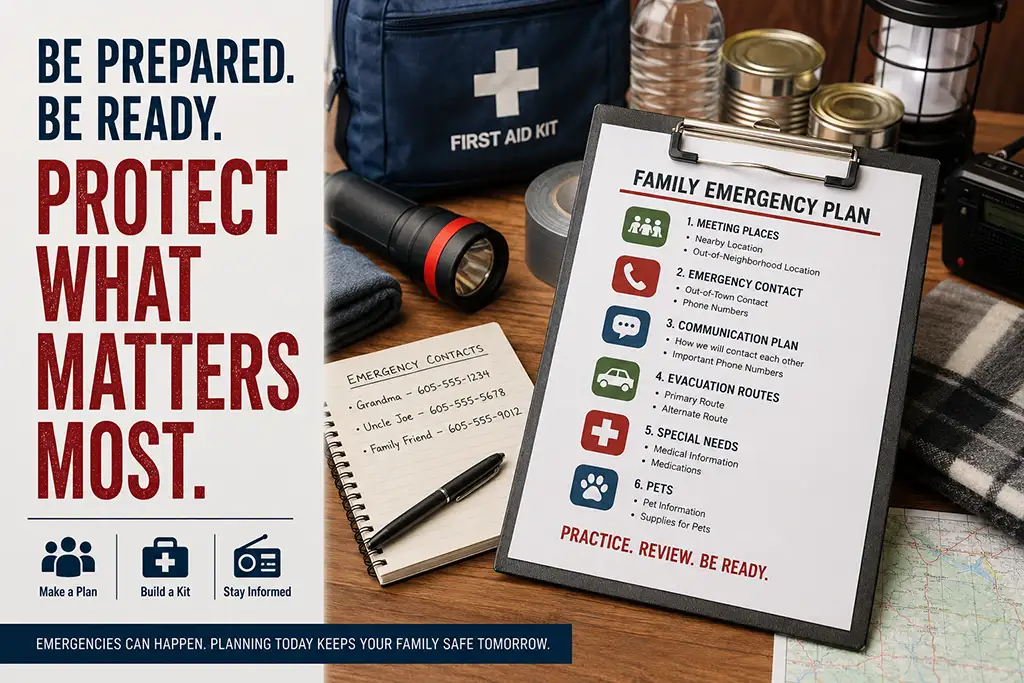
1. Know Your Risks
Start by discussing the types of emergencies most likely to occur in your area.
For South Dakota, these may include:
- 🌪️ Tornadoes
- ⛈️ Severe thunderstorms
- ❄️ Winter storms & blizzards
- 🌊 Flooding
- 🔥 Grass or wildland fires
- ⚡ Extended power outages
Talk about where you would go and what actions you would take for each situation.
2. Choose Two Meeting Places
If your family becomes separated, everyone should know exactly where to meet.
Nearby Meeting Place
- Example: Neighbor's house
- Mailbox across the street
- Community park
Outside Your Neighborhood
- Grandparent's home
- Friend's house
- Community center
- Church
Choose locations that everyone knows.
3. Pick an Emergency Contact
Select someone who lives outside your local area.
If local phone lines become overloaded, long-distance calls or text messages may still work.
Every family member should know:
- Contact's name
- Phone number
- Address
Children should keep this information in their backpack or wallet.
4. Plan How You'll Communicate
Discuss several ways to stay in touch.
✔ Cell phones
✔ Text messages
✔ Social media check-ins
✔ Emergency contact
Remember:
Text messages often work when phone calls do not.
5. Know Your Evacuation Routes
If officials issue an evacuation order:
- Leave early if instructed.
- Know at least two ways out of your neighborhood.
- Keep your vehicle fueled when severe weather is expected.
- Know where you will stay if you must leave home.
Never drive through flooded roads.
6. Plan for Children, Seniors & Pets
Think about everyone in your household.
Include plans for:
- Young children
- Older adults
- Family members with disabilities
- Medical equipment
- Prescription medications
- Pets and livestock
Don't forget pet food, leashes, carriers, and vaccination records.
7. Practice Your Plan
A plan only works if everyone knows it.
Try practicing:
- Fire escape routes
- Tornado shelter drills
- Emergency meeting locations
- Contacting your emergency contact
Review your plan at least once each year or whenever your family changes.
Family Emergency Plan Checklist
☐ Discuss local hazards
☐ Choose two meeting places
☐ Pick an out-of-town emergency contact
☐ Save emergency phone numbers
☐ Plan evacuation routes
☐ Include children, seniors, pets, and special medical needs
☐ Practice your emergency plan
☐ Review and update your plan annually
Helpful Resources
For printable family emergency planning forms and additional preparedness information, visit: