
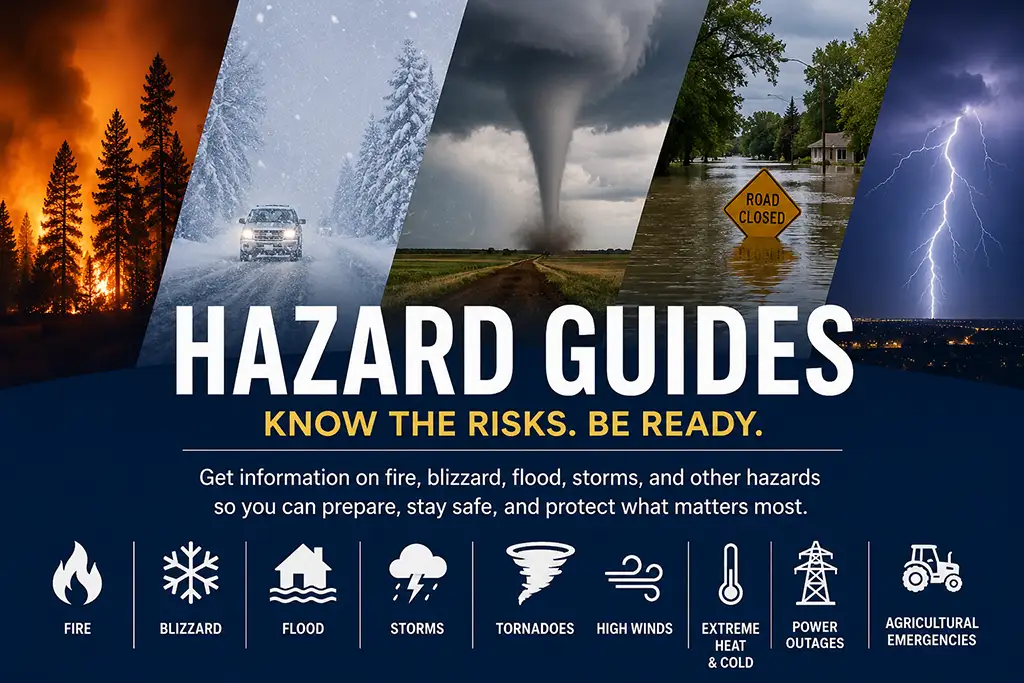
Know the Risks. Be Ready.
Every community faces different hazards throughout the year. Knowing what to do before, during, and after an emergency can help protect you, your family, and your property.
Select a hazard below to learn how to prepare, stay safe, and recover after an emergency.
🔥 Fire
Whether it's a home fire or grassland wildfire, fires can spread quickly.
Learn about:
- Creating a home fire escape plan
- Smoke alarms and fire extinguishers
- Wildfire preparedness
- Evacuation tips
- Returning home safely
Remember: Get out, stay out, and call 911.
❄️ Blizzard & Winter Storms
South Dakota winters can bring heavy snow, ice, dangerous wind chills, and whiteout conditions.
Learn about:
- Winter emergency kits
- Safe travel
- Staying warm during power outages
- Preventing frostbite and hypothermia
- Snow removal safety
Remember: If you don't have to travel, stay home.
🌊 Flooding
Floodwaters can rise quickly and become extremely dangerous.
Learn about:
- Flood watches vs. warnings
- Protecting your home
- Evacuation planning
- Safe cleanup after flooding
- Flood insurance information
Remember: Turn Around, Don't Drown®.
⛈️ Severe Thunderstorms
Thunderstorms can produce damaging winds, hail, lightning, and tornadoes.
Learn about:
- Severe weather alerts
- Lightning safety
- Protecting your property
- What to do indoors and outdoors
Remember: When thunder roars, go indoors.
🌪️ Tornadoes
Tornadoes can develop quickly with little warning.
Learn about:
- Finding safe shelter
- Warning sirens
- Emergency kits
- Mobile home safety
- Recovery after a tornado
Remember: Go to the lowest level and stay away from windows.
🌬️ High Winds
Strong winds can damage buildings, knock down trees, and create dangerous driving conditions.
Learn about:
- Securing outdoor items
- Driving safely
- Power outage preparation
- Tree hazards
⚡ Power Outages
Power outages can occur during any emergency.
Learn about:
- Food safety
- Generator safety
- Staying warm or cool
- Backup lighting
- Charging devices
🌡️ Extreme Heat
Heat is one of the leading weather-related causes of death.
Learn about:
- Heat exhaustion vs. heat stroke
- Staying hydrated
- Cooling centers
- Protecting children and pets
🧊 Extreme Cold
Dangerous cold can cause frostbite and hypothermia in minutes.
Learn about:
- Dressing in layers
- Home heating safety
- Carbon monoxide prevention
- Protecting livestock and pets
🦠 Public Health Emergencies
Illness outbreaks and other health emergencies require preparation.
Learn about:
- Staying informed
- Vaccinations
- Hygiene
- Caring for family members
- Emergency supplies
🚜 Agricultural Emergencies
Living in a rural county means preparing for agricultural emergencies.
Learn about:
- Livestock evacuation
- Farm equipment safety
- Chemical spills
- Rural wildfire response
📻 Emergency Alerts
Know where to get trusted information during an emergency.
- Wireless Emergency Alerts
- NOAA Weather Radio
- Local emergency notifications
- County social media
- Local radio stations
Before, During & After Any Emergency
No matter the emergency:
✅ Stay informed.
✅ Have an emergency kit ready.
✅ Know your evacuation routes.
✅ Follow instructions from local officials.
✅ Check on neighbors who may need assistance.